लुम्बिनी क्षेत्रको विकासका लागि चीन सरकारले आठ अर्ब रुपियाँ लगानी गर्ने भएको छ । सूचना तथा सञ्चार मन्त्रालयमा सोमबार आयोजित पत्रकार भेटघाट कार्यक्रममा सङ्घीय मामिला, संविधानसभा, संसदीय व्यवस्था तथा संस्कृति मन्त्रालयका प्रवक्ता जलकृष्ण श्रेष्ठले यसका लागि सरकारले सैद्धान्तिक रूपमा स्वीकृति प्रदान गरिसकेको जानकारी दिनुभयो । उहाँले अनुसन्धानमूलक काम, पवित्र बगैँचा, अग्लो बुद्धको मूर्ति र पाँचतारे होटल निर्माणका लागि चिनियाँ पक्षले रुचि देखाएको बताउनुभयो । सिँचाइ मन्त्रालयका प्रवक्ता मथुरा डङ्गोलले कैलालीमा रहेको रानीजमरा कुलोलाई वैज्ञानिक ढङ्गले बाँध बनाएर पानी लैजाने कुरामा विश्व बैङ्क सहमत भएको जानकारी दिनुभयो । यसका लागि विश्व बैङ्कले सात करोड ५० लाख डलर ऋणसहयोग दिने भएको छ ।
Wednesday, February 3, 2010


दशौं राष्ट्रिय बौद्ध सम्मेलनः सिंहावलोकन

By रीना तुलाधर
लुम्बिनीको विकासः राष्ट्रिय प्रतिष्ठाको अवधारणा लिई शुरु भएको दशौं राष्ट्रिय बौद्ध सम्मेलन यही पुस ३ गते लुम्बिनीमा धर्मोदय महाचैत्यको परिसरमा छ बुँदे लुम्बिनी घोषणापत्र जारी गरी सम्पन्न भएको छ।राष्ट्रपति डा.रामवरण यादवद्वारा प्रमुख आतिथ्य ग्रहण र समुद्घाटन गरिएको समारोहमा राष्ट्रपतिले भगवान् बुद्धको जन्मभूमि नै आफ्नो मातृभूमिको रुपमा पाउँदा सम्पूर्ण नेपालीको गौरव र प्रतिष्ठा बढेको बताउनुभएको थियो। बहुजातीय, बहुभाषिक,बहुसांस्कृतिक, बहुधार्मिक बुद्धभूमि नेपाल धर्म निरपेक्ष गणतन्त्र राष्ट्रमा परिणत भइसकेको र यतिबेला राष्ट्र निर्माण र विकासका लागि शान्ति सुव्यवस्थालाई संस्थागत गर्ने ऐतिहासिक जिम्मेवारी हाम्रो काँधमा आएको उल्लेख गर्दै उहाँले बुद्धको जन्मभूमि नेपालमा शान्तिपूर्वक छिटै संविधान लेख्ने कार्य पूरा होस् भन्ने अपेक्षा राख्नुभएको थियो।
समुद्घाटन समारोहमा उपस्थित संस्कृतिमन्त्री एवम् लुम्बिनी विकास कोषका अध्यक्ष मीनेन्द्र रिजालले दशौं राष्ट्रिय बौद्ध सम्मेलनको सफलताले बुद्ध जन्मेको ठाउँ भारतमा पर्दछ भन्ने भ्रमपूर्ण प्रचारलाई रोक्नको लागि मद्दत पुग्नेछ भन्नुभयो। त्यस्तै श्रीलंकाका राजदूत थोसापाला हेवागेले लुम्बिनीमा गुरु योजनाअनुसार पूरा काम भएको छैन, यो धार्मिकका साथै पर्यटकीय स्थलको रुपमा पनि विकसित गर्न यहाँ आधारभूत विकासको अत्यन्त जरुरी भएको उल्लेख गर्नुभएको थियो। थाइलैन्डका राजदूत मारिस संयिगम पोङ्साले ‘धर्मोदय सभाको यस आयोजनाले नेपालमा बौद्ध समुदायको बीच एकताको भावना आउनेछ भन्ने विश्वास छ’ भन्नुभयो।
धर्मोदय सभाद्वारा निर्माणाधीन धर्मोदय महाचैत्यको परिसरमा सम्पन्न भएको दशौं राष्ट्रिय बौद्ध सम्मेलनको अघिल्लो दिन पुस १ गतेका दिन धर्मोदय महाचैत्य धम्महलभित्र स्वर्ण बुद्ध प्रतिमाको पनि उद्घाटन भएको थियो। हलभित्र स्थापित १६ फिटको स्वर्ण बुद्ध प्रतिमाको तीनवटै बौद्ध यान थेरवाद, महायान तथा वज्रयानका वरिष्ठ धर्मगुरुहरुद्वारा तीनै किसिमका विधि पूजाबाट प्रतिस्थापन पूजा गरिएको थियो। जुन पूजा एउटा नमूनाको रुपमा लिन सकिन्छ। नेपालमा प्रचलित तीनवटै बौद्ध यानको एकता स्वरुप सम्मेलनको समुद्घाटनको दिनमा पनि तीनवटै यानका धर्मगुरुहरुले आ–आफ्नो विधिअनुसार मंगलकामनाको प्रार्थना गरी सम्मेलनको थालनी गर्नुभएको थियो। जसलाई एकताको प्रतीकको रुपमा लिन सकिन्छ।
धर्मोदय सभाले १० वटासम्म राष्ट्रिय सम्मेलन गरिसकेको छ तर यसपालि धर्मोदय सभाकै तत्वावधानमा निर्माणाधीन धर्मोदय महाचैत्यको परिसरमा सम्मेलन हुनु, धम्महल, स्वर्ण बुद्ध प्रतिमा, स्वर्ण वज्रधातु तथा चैत्यभित्र अभिताभ बुद्ध, शाक्यमुनी बुद्ध तथा मैत्री बोधिसत्व गरी ८ सयभन्दा बढी साना बुद्ध प्रतिमाहरु स्थापना हुनु दशौं राष्ट्रिय बौद्ध सम्मेलनको एउटा विशेष पहिचान हो। धर्मोदय सभाले हरेक दुई वर्षमा सम्मेलनको आयोजना गर्दै आएको छ। धर्मोदय सभाले निर्माण गरेको धर्मोदय महाचैत्यपरिसरको भविष्यमा सुरक्षा पनि धर्मोदय सभाले नै जिम्मा लिनेछ भन्ने धर्मावलम्बीहरुले आशा लिएको छ। जो एउटा अति आवश्यक कदम पनि हो र लुम्बिनी विकास कोष र धर्मोदय सभाको संयुक्त प्रयासले यसको सुरक्षा गरेमा निक्कै राम्रो हुनेछ।
समुद्घाटन समारोहमा नेपालमा उल्लेखनीय बुद्ध शासनिक योगदान दिने व्यक्तित्वलाई धर्मोदय सभाले हरेक २,२ वर्षमा दिँदै आएको ‘धर्मोदय धम्म पुरस्कार’ यो पालि राष्ट्रपति डा.यादवको हातबाट तिलकमान गुभाजुलाई प्रदान गरिएको थियो।
दशौं राष्ट्रिय बौद्ध सम्मेलनको सफलताको लागि प्रधानमन्त्रीलगायत, विश्व बौद्ध भ्रातृत्व संघ तथा अन्य संघसंस्थाहरुले शुभकामना सन्देश प्राप्त भएको थियो। ‘विश्व शान्तिका प्रतीक महामानव गौतम बुद्धको जन्मस्थल नेपालमा हुनु हामी सबैको लागि गौरवको विषय हो। विश्वमा शान्तिको मुहानको रुपमा चिनिएको लुम्बिनीलाई हामीले हाम्रो मुलुकमा दिगो शान्ति कायम गर्दै विश्वमा शान्तिको सन्देश दिनसक्नु अहिलेको आवश्यकता हो। यसतर्फ धर्मोदय सभाले रचनात्मक सहयोग पुर्याउन सक्ने आशा लिएको छु’ प्रमको शुभकामना सन्देशमा उल्लेख गरिएको थियो।
४२ जिल्लाबाट १ हजारभन्दा बढीको सहभागिता रहेको दशौं राष्ट्रिय बौद्ध सम्मेलनको दोस्रो दिन ‘लुम्बिनी विकास र धर्माचरण’ विषयमा उपप्राध्यापक देवेन्द्रराज शाक्यद्वारा प्रतुत कार्यपत्रमाथि व्यापक छलफल तथा टिप्पणी गरियो। समूहगत छलफलको कार्यक्रममा ‘राष्ट्रिय जनगणना र बौद्ध जागरण’, ‘लुम्बिनी विकास र बुद्ध शिक्षा’,'धर्म निरपेक्षता र लोकतन्त्र’,'लुम्बिनीको सुरक्षा तथा वातावरण’ विषयहरुमा छलफल भएको थियो। कार्यपत्रको विषय र छलफल गर्न छानिएका विषयहरु बुद्ध धर्मको संरक्षण, प्रचारप्रसार तथा लुम्बिनीको विकास गर्नाका लागि भविष्यमा कोशेढुंगाको रुपमा साबित हुनेछन्। छलफलको निचोडबाट जारी गरिएको ६ बुँदे लुम्बिनी घोषणापत्रमा उल्लेख गरिएका बुँदाहरु यसप्रकार छन् :
१. २०६८ सालमा हुने जनगणनामा समानुपातिकरुपमा अवसर दिलाउनुपर्ने।
२. राज्यमा घोषणा भइसकेको धर्म निरपेक्षतालाई कार्यान्वयन निष्पक्ष रुपमा गर्नुपर्ने।
३. बौद्ध धामिर्कस्थलमा अबौद्ध क्रियाकलाप हुन नदिन सत्प्रयास जारी राख्ने।
४. लुम्बिनीलाई मद्यमांस एवम् व्यापारिक कारोबारको स्थल हुन नदिन जोड दिने।
५. राज्यमा हिंसा, बलि रोक्न उद्यत हुनुपर्ने।
६. लुम्बिनीको वातावरण विश्वकै मैत्री क्षेत्रको नमूनाको रुपमा विकास गर्ने।
सम्मेलनको सफलतामा आमसञ्चारमाध्यमको पूर्ण सहयोग अविष्मरणीय छ। अन्नपूर्ण ज्ञानमाला संघ र पाल्पा ज्ञानमाला संघद्वारा प्रस्तुत गरिएको बौद्ध भजनले सम्पूर्ण सहभागीलाई आनन्दले विभोर गरिदियो र त्यो क्षण सम्झन लायकको छ।
समापन सभाको मन्तव्य दिने क्रममा एक मात्र महिला वक्ता रुपन्देही शाखाका अध्यक्ष सुश्री विद्यादेवी शाक्यको जोश र जाँगरले भरिएको भाषणले उपस्थित सहभागीहरुको ध्यान आकर्षण गर्न सफल भएको थियो।
४५० जनाको मूल समारोह समिति तथा २१ वटा उपसमितिको कार्यदलको गठन गरी सम्पन्न भएको दशौं राष्ट्रिय बौद्ध सम्मेलनमा यदाकदा त्रुटिहरु नभएका होइनन्। आयोजनले पूर्ण समर्पणका बाबजुद पनि व्यवस्थापनमा केही कमीकमजोरी रहेको सहभागीहरुले महसुस गरे।
सम्मेलनको समापन समारोहमा प्रमुख अतिथिको रुपमा आमन्त्रित एनेकपा माओवादीका अध्यक्ष पुष्पकमल दाहाल ‘प्रचण्ड’ आउनुहुनेछ भनी व्यापक प्रचार भए तापनि अन्त्यमा केही कारणवश उपस्थिति हुन नसक्ने भनी आयोजकले जानकारी दिएपछि जुन हर्षोल्लासका साथ सञ्चालन भएको सम्मेलनको अन्त्य सहभागीहरुले खल्लोपन अनुभव गर्नुपर्यो।
अब दुई वर्षपछि हुने अर्को एघारौं राष्ट्रिय बौद्ध सम्मेलनमा दशौं सम्मेलनको घोषणापत्रको कार्य प्रगतिको विवरण प्रस्तुत गरिनेछ भनी समस्त बौद्ध समुदायले अपेक्षा गरेका छन्। दशौं राष्ट्रिय बौद्ध सम्मेलन भगवान् बुद्ध जन्मिएको लुम्बिनीमा धर्मोदय महाचैत्य विहारमा सफलताकासाथ सम्पन्न गर्न सकेकोमा समस्त सहभागीहरुले धर्मोदय सभा र लुम्बिनी धर्मोदय उपसमितिलाई धन्यवाद नदिइरहन सकिँदैन।
नेपालसमाचारपत्र (सोमवार, पुस २०, २०६६) मा प्रकाशित
Kapilvastu Day Preparation Activity Update Notes

1. Radio Himali Sworaharu interview on Kapilvastu Day: Interview with Ram Kumar
2. Kapilvastu Day in Nort America: in Nepali and in English
3. Kapilvastu Day Marked in UBC: http://nsaubc.org/?q=node/44
1 December:
Kapilvastu Day in Sworna Sikhsa Eng. Sec. School accomplished: http://worldamity.wordpress.com/2009/12/01/kapilvastu-day-in-sworna-sikhsa-eng-sec-school-accomplished/
30 November:
1. Discussion Programme organized in Vancouver to mark Kapilvastu Day: Vancouvour programme
http://www.dcnepal.me/news_prabasi.php?nid=9484
2. Buddha preached अप्पदीपो भव meaning = “Be your own light”. In another words ” Enlighten yourself”. Following is a program to help ones to enlighten their inner selves. I believe Children are the ones who are positive to receive any light/education/enlightenment.
अस्वीकृत विचारसहित्य आन्दोलनको “कपिलवस्तु दिवश कार्यक्रम” । सिद्धान्तः आजका बालबालिका नै भोलीका नेपालका कर्णाधार हुन् । कार्यक्रम शीर्षकः “हाम्रो गौरव कपिलवस्तु र बुद्ध”। उद्देश्यः वैचारिक कार्याशाला गोष्ठी संचालन र कपिलवस्तु र बुद्धबारे साहित्यिक रचना सृजना । सहभागी: ५०० + बालवालिका र नवयुवा । स्थान : स्वर्ण शिक्षा इ. माध्यमिक विद्यालय गोकर्ण काठमाडौँ ।
कार्यक्रम :
०९:३० = एसेम्ब्लीमा उद्घाटन । डा. कविताराम श्रेष्ठ, प्रि. गोविन्द श्रेष्ठ र
राष्ट्रपतिद्वारा ‘ग्रीन अम्बेसडर’को उपाधीबाट सम्मानित यसै स्कुलका छात्रा अल्फा श्रेष्ठद्वारा “बुद्ध र पर्यावरण” विषयक प्रवचन ।
१०:३०-०११:३० = ५०० छात्रछात्राबाट मार्च पास ।
११:३०-०१:०० = प्रि. गोविन्द श्रेष्ठद्वारा कपिलवस्तु र बुद्धबारे प्रवचन, तथा डा. कविताराम श्रेष्ठद्वारा साहित्यिक रचना-सृजना-प्रविधिबारे प्रशिक्षण ।
०१:००-०२:०० = विद्यार्थीहरुद्वारा कार्याशालामा कपिलवस्तु र बुद्धबारे साहित्यिक रचना सृजना
०२:००-३:०० = रचना वाचन
०३:०० = उत्कृष्ट पाँच रचनाको फेसबुक इमेल र अस्वीकृत डट कमबाट विश्वव्यपि प्रसारण
28 November:
1. Ram Hari Khakurel and friends are going to organise discssion porgramme on the occassion of Kapilvastu Day in Paris, France.
27 November:
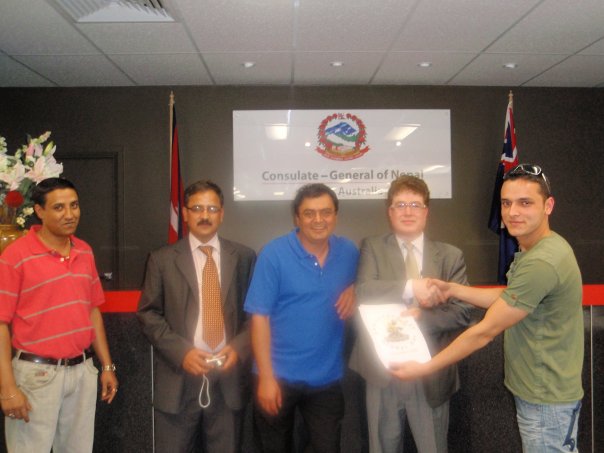
1. In Sydney today in a programme Sujan Neupane handed over Kapilvastu Day booklet and leaflet to the Consulate General of Nepal to New South Wales HE Mr. Deepak Khadka. In the programme Under Secretary Mr Matrika Marasini from Ministry of Commerce and Supplies was also present. Link: http://worldamity.wordpress.com/Sydney programme
http://nepalisamachar.com/?p=5625
http://www.kapilvastu.com/news.asp?catID=571
http://www.gorkhaonline.net/news.php?cid=2019
http://www.dcnepal.me/news_prabasi.php?nid=9255
http://nepalarab.com/news_view.php?id=3998
http://www.onlinekhabar.com/wp/2009/11/29/31697.html
2. Homraj Acharya and friends are organizing a talk programme
Toronto. Friends of Toronto have made two teams
- One team led by Durga Adhikari and Madhav Khanal is visiting Monasteries, Buddhist Temples and Churches and distributing leaflets on Sunday November 29
- Another team led by Chandra Rai, Subas BK, Govinda Siwakoti, Ashok Khadka and Jhalak Poudel is distributing leaflet at downtown toronto on Tuesday, December 1
- They are thinking of organizing a talk programme in mid-december.
Vancouver
- PNEFA is organizing talk programme at Cafe Kathmandu at 1:00 PM on Sunday, November 29.
- Lama Pema is delivering special sermons at thrangu vajrra vidhya buddhist Associaton Monastry at 9:00 AM on November 29
- Radio Himal Vancouver is broadcasting Kapilvastu related informations on Saturady, December 5
- Reading Reveallers’ Club is having special talk on History of Nepal and Buddhism, Buddha and Kapilvastu on Saturday December 13
1. २४ तरिख सिड्नीको नेपाली कन्सुलेट जेनेरलको कार्यालयमा हुने भनिएको राजदुताबसको कार्यक्रम नभएको हुँदा त्यहाँ महामहिम राजदुत योगेन्द्र ढकालज्यू लगायत नेपालबाट आउनुहुने भनिएका सांसदहरुलाई भेटेर ग्लोबल कपिल्बस्तु डेको बारेमा छलफल गरी लोगो र जानकारी पुस्तिका बितरण गर्ने कार्यक्रमा हुन नसकेकोले पुन: राजदुतज्यूसंग संपर्क गरी अन्य कुनै बैकल्पिक उपाय हाललाई राजदूतज्यूको अत्यन्तै कार्य ब्यस्तताको कारण नदेखिएकोले हाम्रो लोगो र जानकारी पुस्तिका राजदुताबासको ठेगानामा पठाइ दिएको छु । दुताबासमा आउने आगन्तुकहरुको जानकारीको लागि दुताबासको कार्यालयमा राखिनेछ उक्त पुस्तिका ।
साथै धेरै दिनको प्रयासपछि आज मैले सिड्नी स्थित नेपाली कन्सुलेट जेनेरल श्री दिपक कुमार खड्काज्यूसंग भएको कुराकानीपस्चात भोली चाडै नै अफिस बिदा हुने भए पनि हाम्रो यस कार्यक्रमको लागि भनेर दिउसो कारीब ४ बजेतिर केही समयको लागि आफ्नो कार्यालय खोली छलफल र लोगो तथा जानकारी पुस्तिका हस्तान्तरण कार्यक्रमको लागि ठाउँ र समय उपलब्ध गराइदिने बताउनु भएको छ साथै डिसेम्बर १ मा नै उहाँ पाहुना भएर जानु हुने Australian Himalayan Foundation को कार्यक्रममा पनि त्याहा आउनु हुने करिब १०० बिदेसी सहभागीहरुलाई यस कार्यक्रमको बारेमा जानकारी गराइ मैले भोली उपलब्ध गराउन लागेका leaftlet हरु बितरण गरी दिने समेत बताउनु भएको छ।
धन्यवाद
सुजन न्यौपाने
सिड्नी अष्ट्रेलिया
24 November:
1. Nepalese Ambassador to Malaysia HE Rishi Adhikari decided to do some awareness raising activities that Buddha was borne in Nepal not in India. He will plan activities and try to go ahead with the Nepalese diaspora there on this issue.
2. Basu Dev Regmi decided to put poster around his university – The University of Western Australi- in Perth, Western Australia.
23 November:
1. Embassy of Nepal, Kuala Lumpur, Malaysia is positive. Waiting for the decision.
2. NANSA (North American Nepali Student Association) has decided to support the Kapilbastu Day, and the President has requested its members to make maximum efforts possible to disseminate leaflet on Dec. 1
3. One of the very active persons of “AGNI” (public person, fan) (AGNI EICKERMANN wrote 11 books and some of them translated in many languages. More than 1000 Feng Sui Consultants and hundreds of spiritual teachers working with him all over the world) Raho J. Bornhorst wrote:
Dear Ram Kumar,
that initiative is good and i am happy to support it.
What would you like me to do/contribute?
May be I spread something in FB?
Love,
Raho
After my response:
dear ram kumar,
21 November:i love the idea of spreading buddhist material around the globe to enhance awarens for peace and messages about peace. I´m in with this!
Smiles,
raho
The reason to highlight the part of my email communication with ![]() Raho J. Bornhorst is that the impact due to him will not merely be the impact of single person but of a group.
Raho J. Bornhorst is that the impact due to him will not merely be the impact of single person but of a group.
1. Damodar Poudyal is organizing leaflet distribution programme at Germany.
2. Leaflet to distribute on Kapilvastu Day (prepared by Bhanu Poudyal and corrected by Pramod Dhakal): http://worldamity.wordpress.com/2009/11/21/78kdleaflet/ We will update with photos.
3. Hari Kumar Shrestha is going to discuss this event with friends in Taiwan today for any possible programmes to be organized there.
4. PNEFA under leadership of its president Abi Sharma is possibly organizing a talk programme at Cafe Kathmandu, Vancouver on 29th November 2009
5. Friends in Toronto are distributing information leaflet at downtown Toronto. PNEFA at Toronto is possibly organizing a talk programme
6. In Consulate General office (Sydney) Sujan Neupane and friends will handover our documents in the form of booklet. Some parliametary members will be the guest in the programme. Nepali Ambassador to Australia HE Mr. Yogendra Dhakal will keep those information in the embassy on December 1 for public and visitors information.
19 November:
1. Bhanu Poudyal developed draft leaflet to distribute on Kapilavastu Day. Once it will be finalised, we will let you know about it.
2. Ram Kumar discussed with NRN France representative Harihar Aryal about the possibility to do something there in solidarity. Due to time constrain still unknown about the possibility.
18 November:
1. NRN Vice President Jiba Lamichane is discussing with Dr. Upendra Mahato and friends about the possibility about the programme they could do in solidarity.
2. Kapilvastu Day account and Kapilvastu Day Fan Club opened in Facebook. This could be helpful for the continuity of the programme in some extent.
3. Sujan Neupane (Sydney) initiated to communicate with the ambassador as follow up of the communication initiated by Ram Kumar and the ambassador is positive and already set tentative programme. Ram Kumar will call both Sujan and the ambassador on Saturday for further discussion about the programme and help needed to Sujan.
4. Nepali embassy to China is also positive. Today Ram Kumar sent letter again as consellor informed that they could not receive the letter sent before.
11 November:
Responses available till today:
- Homraj Acharya and friends are planning to organize a talk program in Washington DC.
- Madhusudan Rimal and friends at Germany are trying to organize a programme at their location.
- Friends at Toronto (Ontario, Canada), including Subas BK, Ashok Khadka, Govinda Siwakoti, etc., are trying to organize a talk programme at their location.
- Rajendra Neupane and other friends at Victoria (British Columbia, Canada) are trying to organize a talk programme to mark this day.
- Reading Revellers’ Club at Vancouver (British Columbia, Canada) has selected Buddha, Kapilvastu and Lumbini as theme of their next meeting on December 5, 2009 to express its solidarity to Kapilvastu day.
- Ram Kumar Shrestha – located at London (UK) is mobilizing his more than 500 friends through emails and social networking websites. He has already made the day popular by publishing materials online at http://nepalisamachar.com/?p=4975, http://www.nepalarab.com/articles_view.php?id=509; http://nepalarab.com/press_view.php?id=112 and so many others (most of the links given below). He also has written to Ambassadors and Consul Generals requesting their solidarity in this programme.
- Some friends decided to write poems for this programme. Relevant poems, songs, bhajans and articles most well come. I would like to request again to include the logo with them while keeping them as note. Use of logo will have lots of importance and one of the advantages is to make impact study job very easy and time saving.
- North American Nepali Students Association (that covers USA and Canada) has agreed to morally support the Kapilvastu campaign.
- To save your time (who are too busy and cannot manage time to find materials from internet for Kapilvastu Day), we managed to create this link http://worldamity.wordpress.com/2009/11/12/buddha-and-buddhism-related-materials/ (This is for Facebook and Twitter programme)
- Some Feedbacks:
“One friend was telling me that he liked the logo and made his computer’s desktop background. hopefully that day will be really successful.” Sujan Neupane (Sydney)
Slogan : ‘A campaign for finding the peace all over the world.’ –Dinesh Dahal (Journalist)
Update:
1. Bhanu Poudyal is mobilizing people in USA and Canada for Kapilavastu Day. Nepali Students through their organization in University of British Columbia are thinking of organizing information seminar and leaflet distribution on that day. One book club in Vancouver is having programme on December 5 on Lumbini and Lord Buddha (people will not have time on December 1 as it is weekday)
2. Sherpa Kyidug and friends from Toronto are also trying to do something in solidarity.
3. I am selecting some friends from different countries for the impact study of the programme. Besides them anybody, if interested, could send impact study and everybody’s name will be in the main report with the link of their reports. The study report to be sent will be very simple, not so complicated. I will develop format and let you know in the next update.
4. Some friends decided to write poems for this programme. Relevant poems, songs, bhajans and articles most well come. I would like to request again to include the logo with them while keeping them as note. Use of logo will have lots of importance and one of the advantages is to make impact study job very easy and time saving.
5. The numbers of messages and mails I am receiving show that many friends very active for this programme. I noticed some friends already started postings for this programme.
6. I wrote to all Ambassadors and Consul Generals requesting their solidarity in this programme, but 25 mails returned (I used the addresses from ministry of Foreign affairs web site) . Very strange! In new Nepal, working system still old. Nothing updated. I tried to call in couple of numbers, some numbers did not work and where I was able to contact, I could not go furthermore due to not familiar languages.
7. We want any sort of programme be organised in Kapilavastu on that day. We are trying for this but still could not get success. I am requesting a guy from Kapilavastu for his initiaton, but he is not in Nepal. Anyway he is trying. If anybody could help us to organise any sort of programme there in solidarity, it could be great help.
8. Only in FB I am communicating with ab 500 friends through 26 threads. So pls do not make any note for minor mistakes in the language as I am doing everything in rush.
1. Bhanu Poudyal is mobilizing people in USA and Canada for Kapilavastu Day. Nepali Students through their organization in University of British Columbia are thinking of organizing information seminar and leaflet distribution on that day. One book club in Vancouver is having programme on December 5 on Lumbini and Lord Buddha (people will not have time on December 1 as it is weekday)
2. Sherpa Kyidug and friends from Toronto are also trying to do something in solidarity.
3. I am selecting some friends from different countries for the impact study of the programme. Besides them anybody, if interested, could send impact study and everybody’s name will be in the main report with the link of their reports. The study report to be sent will be very simple, not so complicated. I will develop format and let you know in the next update.
4. Some friends decided to write poems for this programme. Relevant poems, songs, bhajans and articles most well come. I would like to request again to include the logo with them while keeping them as note. Use of logo will have lots of importance and one of the advantages is to make impact study job very easy and time saving.
5. The numbers of messages and mails I am receiving show that many friends very active for this programme. I noticed some friends already started postings for this programme.
6. I wrote to all Ambassadors and Consul Generals requesting their solidarity in this programme, but 25 mails returned (I used the addresses from ministry of Foreign affairs web site) . Very strange! In new Nepal, working system still old. Nothing updated. I tried to call in couple of numbers, some numbers did not work and where I was able to contact, I could not go furthermore due to not familiar languages.
7. We want any sort of programme be organised in Kapilavastu on that day. We are trying for this but still could not get success. I am requesting a guy from Kapilavastu for his initiaton, but he is not in Nepal. Anyway he is trying. If anybody could help us to organise any sort of programme there in solidarity, it could be great help.
8. Only in FB I am communicating with ab 500 friends through 26 threads. So pls do not make any note for minor mistakes in the language as I am doing everything in rush.
Some requests:
1. केही artist साथीहरु हुनुहुन्छ भने सो दिनको लागि उपयुक्त पोस्टरहरु डिजाइन गर्न आग्रह गर्न सकिन्छ कि? पोस्टरहरुलाई आफ्नै होमपेजमा राखी लिंक बनाएर लिंक राखिनु राम्रो हुन्छ होला कार्यक्रमको लोगो अनिबार्य बानाइेकोले । आफ्नै होमपेज नहुनेले हुने साथीसंग अनुरोध गर्ने अथबा omram2002@hotmail.com अथबा omram2002@gmail.comमा पठाउनु भयो भने लिंक बनाएर यहाँलाई पठाइदिनेछु ।
2. सो दिनको लागि केही slogan छन कि?
3. १ हप्ता अगाडिदेखि प्रचार प्रसारको लागि प्रयोग गरिने slogan केही छन कि ?
Some important information:
१. साहित्यकार, अनुसन्धानकर्ता, सिनेकर्मी, राजनीतिकर्मी, भिजिटिङ प्रोफेसर, विकाशे कार्यकता आदिको भूमिका एकैपटक संगसँगै निभाई रहनु भएका नेपाली साहित्य आन्दोलनमा अविछिन्न लागीरहनु भएका सक्रिय स्रष्टा, अस्विकृत आन्दोलन र बुट पालिस आन्दोलनका अभियन्ता,
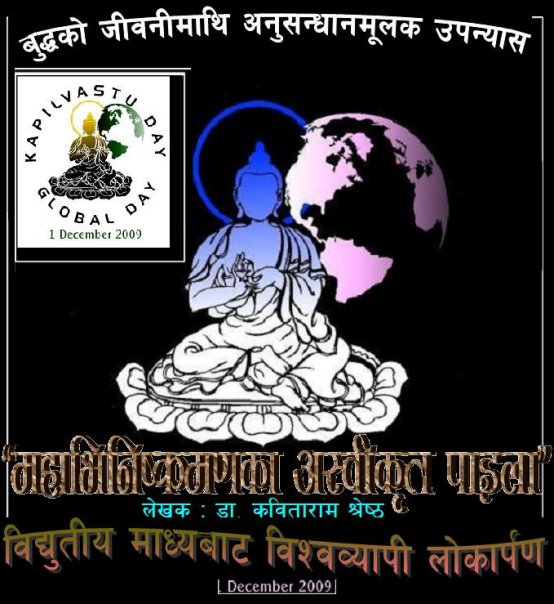
डा.कविताराम श्रेष्ठ हालसम्म पुस्तकाकारमा प्रकाशित नभएको बुद्धको जीवनीमा आधारित एउटा नयाँ वैचारिक (researchful) उपन्यास कपिलवस्तु दिवसको अवसर पारेर अनलाइन लोकार्पण गर्न चाहनु हुन्छ भन्ने कुरा सहर्ष जानकारी गराउन चाहन्छु ।
२. कपिलबस्तु दिबसको दिन प्रत्येक पोस्टिङमा प्रयोग गरिनु पर्ने लोगो attach गरेको छु ।
३. यदि बुद्धका भनाइहरु राख्नु हुन्छ भने लोगो जुन बेला upload गर्दा पनि हुन्छ, तर कुनै लिंक राख्नु छ बने पहिला लोगो upload गरेर मात्र लिंक राख्नु पर्छ । पहिला लिंक राखेपछि लोगो राख्न सकिन्न ।
Part of circulation among about 500 in Facebook (4 Novemeber):
कपिलबस्तु दिबसको कार्यक्रम प्रभाबकारी बनाउने केही उपायहरु:
१. उस्तै उस्तै किसिमका सामग्रीहरु सकभर संगसंगै नपरोस भन्ने कुरामा सकभर होसियार हुन प्रयास गर्ने;
२. एउटै सामग्री दोहोर्याउँदा समय अलिक फरक पार्ने;
३. सकभर बिबाद निम्त्याउने किसिमका सामग्री प्रबाह नगरने । कथंकदाचित त्यस किसिमका सामग्री कसैबाट प्रबाह भैहालेको खण्डमा बिबाद गर्नतिर नलागी संबन्धित ब्यक्तिलाई Chat मार्फत त्यस किसिमका सामग्री प्रबाह नगरन आग्रह गर्ने; (यो बुँदाको संभाबना कमै छ बिषयबस्तुको प्रकृतिको कारण );
४ . कार्यक्रम बिस्वभरि नै गरिने भएको तर अस्ट्रेलियामा रात परेर सुत्ने बेलामा बेलायत/यूरोपतिर बिहान हुने र अमेरिकामा त सुतिरहने समय हुने भएका कारण अस्ट्रेलियामा हुने साथीहरुले सुत्न जानु अघि आफूसंग भएका राम्रा सामग्री नेपालतिरको साथीहरुलाई मेल गरेर पठाइदिने, नेपालबाट बेलायत/यूरोप, बेलायत/यूरोपबाट अमेरिका पास गर्न सकियो भने अझ राम्रो हुन सक्थ्यो यद्यपि यसो नगरदा पनि समयान्तरको कारण पछि पर्ने साथीहरुले पहिलाका साथीहरुद्धारा (आबस्यक परेको खण्डमा ) प्रबाह गरिएका सामग्रीहरु हेरेर त्यसैलै दोहोर्याउन पनि नसकिने भने होइन ;
५. करीब १ हप्ता अघिदेखि नै थाहा नपाउने तथा प्रत्यक्ष संपर्कमा नरहेकाहरुलाई समेत कार्यक्रमबारे जानकारी होस भनेर सतर्कताको लागि सांकेतिक पोस्टिङहरु शुरु गर्न थाल्ने ;
६. कथंकदाचित समयको पाबन्दीले गर्दा कपिलबस्तु दिबसको लागि इण्टरनेट मार्फत सान्दर्भिक सामग्रीहरु खोज्ने अनुकूलता नमिलेको खण्डमा यो लिंक http://oaks.nvg.org/saybud.html प्रयोग गरी बुद्धका भनाइहरु यसबाट लिएर पोस्टिङ् गर्न सक्नु हुनेछ;
७. प्रत्येक पोस्टिङमा लोगो प्रयोग गर्न नबिर्सन अनुरोध छ । यस्ले कार्यक्रममा एक रुपता ल्याउन, यदि त्यस्तै परेर थाहा नपाएकाहरुको लागि पनि एउटै जस्तो कुरा देखेर सतर्क हुन र जिज्ञासा राख्न र होसियार हुन अनि सामग्री संकलन गर्न चाहने र कार्यक्रमको प्रभाब अध्ययन गर्नेहरुको लागि यो निकै उपयोगी हुनेछ । त्यसैले पोस्टिङमा लोगो राख्न बिर्सिएको खण्डमा त्यस्लाई हटाएर पुन: अर्को पोस्टिङ् गर्न अनुरोध गरिन्छ;
८. यस कार्यक्रमको लागि उपयुक्त हुने Slogan केही भएमा दिन अनुरोध छ, र त्यस्लाई सबै समूहमा सर्कुलेट गरिनेछ ।
९. उक्त दिन अन्य सामग्रीहरु प्रबाह नगर्ने । अन्य कुराहरु साथिहरुबीच च्याट मार्फत मात्र आदान प्रदान गर्ने ।
Some coverage links: (There could be other more)
http://www.dainikee.com/newsdetail-10989.html
http://www.mulbato.com/?p=8137
http://hknepal.com/wp/?p=10503
http://nepalisamachar.com/?p=4975
http://kuwaitnepal.com/2009/11/02/
http://www.namasteeurope.com/getnews.php?Action=Full&NewsID=9214
http://nepalarab.com/press_view.php?id=112
http://abc.com.np/index.php?option=com_content&view=article&id=3201:2009-11-01-15-13-14&catid=95:general-public&Itemid=289
http://www.dc-nepal.com/press_release_english.php?nid=556
http://www.onlinekhabar.com/wp/2009/11/02/27428.html
http://www.nepalisrael.net/index.php?action=news&newsId=506
http://www.prabasinepali.com/news.asp?id=3542
http://www.gorkhaonline.net/literature.php?cid=180
http://newsmandu.com/story/48296/
http://www.articles.bagaicha.com/?p=15
http://www.articles.bagaicha.com/?p=13
Some Buddha and Buddhism Related Materials

http://whc.unesco.org/en/list/666 (world heritage site from UNESCO-UN)
http://www.ddckapilvastu.gov.np/
http://en.wikipedia.org/wiki/Kapilvastu_District
http://www.buddhist-temples.com/uttar-pradesh/kapilvastu.html
some pictures http://www.picsearch.com/pictures/travel/cities/asia/northeast%20asia/nepal/kapilvastu.html
About Lumbini
http://en.wikipedia.org/wiki/Lumbini
Academic site http://www.buddhanet.net/e-learning/buddhistworld/lumbini.htm
informative site
http://www.buddhist-temples.com/lumbini.html
http://www.lumbini.org.uk/
http://www.sacred-destinations.com/nepal/lumbini
About Buddha
http://en.wikipedia.org/wiki/Gautama_Buddha
http://en.wikipedia.org/wiki/Buddhahood
http://www.aboutbuddha.org/
Encyclopedia Britannica
http://www.britannica.com/EBchecked/topic/83105/Buddha
In Canada
http://www.synaptic.bc.ca/ejournal/buddhist.htm
Ashoka Pillar
http://en.wikipedia.org/wiki/Pillars_of_Ashoka
About Buddhism
Academic site
http://www.buddhanet.net/
http://en.wikipedia.org/wiki/Buddhism
http://www.sacred-texts.com/bud/index.htm
Video Clips:
Wisdom of Buddha
The Life of Buddha
If you would like to go through part by part
The Life of Buddha Part 1
The Life of Buddha Part 2
The Life of Buddha Part 3
The Life of Buddha Part 4
The Life of Buddha Part 5
Buddha and Buddhism
Introduction to Buddhism
How to Remove Pain and Frustration
Where Science and Buddhism Meet Part 1
Where Science and Buddhism Meet Part 2
The Conscious Universe: Where Buddhism and Physics Converge
Timeless Quotes from The Buddha
Buddha speaks
The enlightened one
Quotes from the Awakened One

Kapilvastu Day Programme in Sydney
Source: Sujan Neupane, Sydney
 Today in a programme Sujan Neupane handed over Kapilvastu Day booklet and leaflet to the Consulate General of Nepal to New South Wales HE Mr. Deepak Khadka at the office of Consulate General to New South Wales, Sydney. In the programme Under Secretary Mr Matrika Marasini from Ministry of Commerce and Supplies was also present.
On December 1 HE Mr. Deepak Khadka will highlight about the programme to more than 100 foreigners and also help to distribute leaflet there in Australian Himalayan Foundation Programme where he will be the guest.
Nepalese ambassador HE Mr. Yogendra Dhakal agreed to keep Kapilvastu Day booklet and leaflet in the embassy for the information of the visitors.
Sujan Neupane handing over the Kapilvastu Day booklet and leaflet to Nepalese Consulate General for New South Wales HE Mr. Deepak Khadaka. Second from left Under Secretary Mr. Matrika Marasini.
This is the first programme officially organised on Kapilvastu Day.
For more photos and links please click here


On December 1 HE Mr. Deepak Khadka will highlight about the programme to more than 100 foreigners and also help to distribute leaflet there in Australian Himalayan Foundation Programme where he will be the guest.
Nepalese ambassador HE Mr. Yogendra Dhakal agreed to keep Kapilvastu Day booklet and leaflet in the embassy for the information of the visitors.
Sujan Neupane handing over the Kapilvastu Day booklet and leaflet to Nepalese Consulate General for New South Wales HE Mr. Deepak Khadaka. Second from left Under Secretary Mr. Matrika Marasini.
This is the first programme officially organised on Kapilvastu Day.
For more photos and links please click here
Discussion Programme in Vancouver to mark Kapilvastu Day

Source: Sanjaya Regmi and Bhanu Poudyal
A discussion on Kapilvastu day was held at Cafe Kathmandu, Vancouver. The topics focused sharing what was known about Buddha and Kapilvastu, the Indian viewpoint and the world’s perception about Buddha and Nepal as the Buddha’s birthplace. The meeting lasted an hour and half and came to the following conclusion:
1. Buddha could be one among many focal points of Nepali national unity and the symbol transcends politics and ethnicity.
2. Kapilvastu day should be an apolitical event and care should betaken that the issue remains unpoliticized throughout.
3. A research was needed to be done on Buddha and Kapilvastu and results compiled into an accessible form, perhaps a webpage.
4. The initiation of Kapilvastu day has to be done through interested individuals through the world.
5. There is a need for a non-profit organization to take the lead and organize all Kapilvastu day enthusiasts into one entity so that all efforts are consolidated.
The action plan of the meeting follows:
1. Distribute flyers in monasteries around Vancouver to increase awareness.
2. Volunteering for a house party on Buddha Jayanti and persuading others to do the same.
3. Persuade local community bodies to include a speech contest on Buddha and Kapilvastu on every New Year party program.
4. Celebrate Dec 1 by creating awareness among friends and with a Deepavali at homes.
5. The initiation and celebration of Kapilvastu day could also be organized collaboratively through interested diasporic individuals and organisations throughout the world.
6. Be a part of the Kapilvastu day facebook page.
Abi Sharma and Sanjaya Regmi played important role for making the programme a success.
Some Products of Kapilvastu Day, Swarna Shiksha School

On the occasion of Kapilvastu Day, Dr. Prof Kavitaram Shrestha organised wonderful program with over 500 students with Assembly, March Pass and Speeches in related subjects followed by a workshop on literary and art works, participated by 41 students from class 5 to 10 of Swornashiksha School, Gokarna, Kathmandu, Nepal. Principal of the school Govinda Shrestha inaugurated the programme, Dr. Kavitaram Shrestha highlighted the importance of the Day, Green Ambassador Alpha Shrestha of class 9 and Kishor Kuinkel of class 8 March passed at 10:30. Workshop started at 11:00. Some of the products of the programme: Please click here
Online Release of “MAVINISKRAMANKA ASWIKRIT PAILA”
On the auspicious occasion of Kapilvastu Day, a research oriented novel on the life of  Buddha “MAHAVINISKRAMANKA ASWIKRIT PAILA” written by renowned writer Dr. Prof. Kavitaram Shrestha, was released online. It is already posted in http://aswikrit.com . The writer is expecting to release by you – the most respectful READER. Why not to hit here: http:///aswikrit.com/index.php?linkId=320
Global Kapilvastu Day Programmes in North America
Source: Bhanu Poudyal, Canada

Nepali compatriots in North America celebrated Kapilvastu Day organizing several programmes. Patriotism and Nepali expatriates’ yearning for territorial integrity, peace, social justice and equitable distribution of means of production were clearly expressed in these programmes.
People in Greater Toronto Area have made two groups to maximize output of activities organized to Mark Kapilvastu Day. One team was involved visiting temples and churches to disseminate information related to Buddha and Kapilvastu on Sunday, November 29, 2009. Another team was involved in visiting Buddhists temples in Brampton and Mississauga and organizing interaction programme in Buddhist temples and handing information leaflet over monks and other concern people on December 1, 2009. Interaction programme at Mississauga was chaired by Honourable member of Constituent Assembly Bhikkhu Ananda.
Bhikkhu Ananda appreciated the efforts made by Nepali expatriates and the team involved in Greater Toronto Area and emphasised requirements of coordinated efforts from all sides including government of Nepal and diplomatic mission around the globe to promote Kapilvastu, Buddha’s teaching and Nepali national sovereignty and territorial integrity. Other speakers of the programme were PNEFA General Secretary Chandra Rai, Subas BK, Govinda Siwakoti and Jhalak Poudel.
An interaction programme was organized in Vancouver on November 29, 2009 to mark Kapilvastu Day. Every participant in the programme coordinated by PNEFA president Abi Sarma has spoken on Buddha and Kapilvastu. The meeting in Vancouver came to a conclusion that
Nepalis Student Association at UBC under leadership of President Umesh Phuyal , Kusum Poudel and Alice Poudel has disseminated information at University of British Columbia. Nityananda Khanal and other friends in Saskatoon have distributed leaflets in University Campus and some educational institutions in the city. Details from interaction programme at Washington DC and Victoria, British Columbia are yet to come.
 For more photos pls click here

Nepali compatriots in North America celebrated Kapilvastu Day organizing several programmes. Patriotism and Nepali expatriates’ yearning for territorial integrity, peace, social justice and equitable distribution of means of production were clearly expressed in these programmes.
People in Greater Toronto Area have made two groups to maximize output of activities organized to Mark Kapilvastu Day. One team was involved visiting temples and churches to disseminate information related to Buddha and Kapilvastu on Sunday, November 29, 2009. Another team was involved in visiting Buddhists temples in Brampton and Mississauga and organizing interaction programme in Buddhist temples and handing information leaflet over monks and other concern people on December 1, 2009. Interaction programme at Mississauga was chaired by Honourable member of Constituent Assembly Bhikkhu Ananda.
Bhikkhu Ananda appreciated the efforts made by Nepali expatriates and the team involved in Greater Toronto Area and emphasised requirements of coordinated efforts from all sides including government of Nepal and diplomatic mission around the globe to promote Kapilvastu, Buddha’s teaching and Nepali national sovereignty and territorial integrity. Other speakers of the programme were PNEFA General Secretary Chandra Rai, Subas BK, Govinda Siwakoti and Jhalak Poudel.
An interaction programme was organized in Vancouver on November 29, 2009 to mark Kapilvastu Day. Every participant in the programme coordinated by PNEFA president Abi Sarma has spoken on Buddha and Kapilvastu. The meeting in Vancouver came to a conclusion that
- Buddha could be one among many focal points of Nepali national unity and the symbol transcends politics and ethnicity.
- Kapilvastu day should be an apolitical event and care should betaken that the issue remains unpoliticized throughout.
- A research was needed to be done on Buddha and Kapilvastu and results compiled into an accessible form, perhaps a webpage.
- The initiation and celebration of Kapilvastu day could also be organized collaboratively through interested diasporic individuals and organisations throughout the world.
- There is a need for a non-profit organization to take the lead and organize all Kapilvastu day enthusiasts into one entity so that all efforts are consolidated.
- Distribute flyers in monasteries around Vancouver to increase awareness.
- Volunteering for a house party on Buddha Jayanti and persuading others to do the same.
- Persuade local community bodies to include a speech contest on Buddha and Kapilvastu on every New Year party program.
- Celebrate Dec 1 by creating awareness among friends and with a Deepavali at homes.
- Be a part of the Kapilvastu day facebook page.
Nepalis Student Association at UBC under leadership of President Umesh Phuyal , Kusum Poudel and Alice Poudel has disseminated information at University of British Columbia. Nityananda Khanal and other friends in Saskatoon have distributed leaflets in University Campus and some educational institutions in the city. Details from interaction programme at Washington DC and Victoria, British Columbia are yet to come.

New debate on birthplace of Buddha
by Rabindra Nath Choudhury, The Asian Age India, Sept 14, 2005
Bhubaneswar, India – There seems to be no end to the controversy over the birthplace of Lord Buddha. The latest claim that the apostle of peace was born in Orissa has been challenged by historian Karuna Sagar Behera.He said, “The Buddha was neither born in Orissa nor visited the place during his lifetime.” Mr Behera said the claims made in this regard could go against the interests of the state.
The controversy began after it was projected sometime ago that the Buddha was born at Kapileswar, a village near here. Among others, an Ashokan inscription said to have been discovered from the place in 1928 was cited to prove the point.
The inscription was similar to the one discovered in 1898 at Lumbini in Nepal, which has all through been acknowledged as the evidence to point that the Buddha was born there. The Lumbini inscription describes that Ashok visited the place because the Buddha was born there.
Mr Behera said the Kapileswar inscription had already been declared as bogus. “Eminent epigraphist D.C. Sircar, at the 1980 Indian History Congress in Mumbai, had described the Kapileswar inscription as a forged document,” he added.
“Historical claims must be backed by evidence . But what some people are doing is far from the truth. There has been no serious research to disprove that the Buddha was born in Lumbini,” he said.
“Buddhist literature is silent about the Buddha being born anywhere in the Kalinga region, let alone Kapileswar village. The works of almost all noted scholars on Ashoka do not mention the Kapileswar inscription as believable evidence to change history,” he said.
Quoting the 1608 work of Lama Taranath, he said there was no doubt that Orissa contributed immensely to the spread of Buddhism, even in the 16th century, when the religion had nearly declined at many places.
Source: http://www.buddhistchannel.tv/index.php?index
Be a light in yourself
Sanu Ghimire, Australia

holding a firebrand of peace in your hand
Muttering the rhymes of non-violence taught by you
Trampling along the roads of humanity guided by your hand
and strivings hard to resuscitate
The dormant wisdom almost forgotten in human soul
This transcendental sermon of yours I repeat,
Be a light in yourself
Mankind, driven crazy by the transient opulence that lasts no long,
Mankind, being painted with the stroke of comfort and material prosperity,
though inside they squirm in pain with their tormented heart
so I ask let’s congregate together and search
your prayer and your recitations
Let’s plant them in our heart and cry
Be a light in yourself
A heart thirsting for eternal redemption of soul
A heart questing for requital for an unreturned love
You say let a distilled river of unconditional love flow hereafter
Lets yourself be drenched and let others drench.
In the cesspool of pains caused by sorrows
Do not linger on drugged by boundless passions
You the one unperturbed in the repose of a sage
That unexpressed tunes of your un-fluttering eyes
You who dissent the worship of stone gods
You who preach others to be the slave of our own the inner being
While spilling the sermons of what is being religious?
You show us the path of eternal redemption
Spurning all kinds of heretic beliefs
I determinedly advocate for purification of your soul
and I am desperate to trace out your footprints
O envoy of peace! O Buddha, the wisdom in yourself!
O designer of human hearts! O the Cosmic Soul!
Those golden formulae that you have produced
those endless mantras that you handed down

Be a light in yourself
Be a light in yourself
Translated by Rabindra Poudel
Dirty Controversy about Kapilvastu (Part 2)
By H.L. Singh
Continued from previous issue… (For part 1 please click here)
 These pilgrims not only visited all important places, stupa and other monuments associated with the incidents of the Buddha’s early life but also elaborately spoke of them in their accounts. But it appears that they did not go to Piprahawa, nor did they mention it. Had the present day Piprahawa in Basti been a part of Kapilvastu they would certainly not have failed to describe in details the stupa and monastery of Piprahawa. The fact that none of the three pilgrims Fa Hsien, Hsuan Tsang and King Ripu Malla of west Nepal visited Piprahawa nor made any mention of it clearly indicates that it was probably not even a part of Kapilvastu during the days of the Buddha.
There can be no comparison between Tilaurakot and Piprahawa. The antiquities of Piprahawa consist of a few clay seals, the ruins of a stupa from which Peppe took out the relic casket in 1898 and the remains of the monastic structure. Because of the scantiness of its antiquities, the archaeologist has now added head, one piece of terrcota horse figure and few other figurines, a few copper and silver coins, pieces of precious stones and the like and the so-called remains of two-huge palace – complexes, the larger being 30 miles square with 28 rooms, the smaller being 26 miles square with 21 rooms. Thus, both the area provided nothing of any real significance. The Buddha head or horse figurine is not at all a pre-Buddha antiquity.
Archaeologist K.M. Srivastava claims to have recovered several more relic caskets similar to the ones discovered by Peppe. He even goes to the extent of asserting that one of the new caskets he has found inside the stupa contains the relics of the Buddha and that Peppe’s caskets were only later additions. This claim of Srivastava is yet to be scientifically analysed. The find of Srivastava did not belong to the pre-Buddha age. In his article published in the Illustrated Weekly of India dated May 16-22, 1976, he had said that all his findings from Piprahawa and Ganwaria are not older than the 4th to 5th century B.C.
Tilaurakot contains the ruins of a full-fledged magnificent palace of a fortified capital city fenced with a tall strong wall, pentrable only through city gates built at four directions and surrounded with a wide moat. Besides a lot of polished grey ware shreds and the associated red ware shreds attributable to the 8th or 7th century brick ware and the associated red ware, attributable to the 6th or 5th century B.C. were also recovered from the Tilaurakot region during the 1972-3 excavation. It was such grandeur noticed in the region that led the earlier experts to declare it as ancient Kapilvastu. In comparison to its heritage of antiquities, Piprahawa or Ganwaria findings are quite meager.
Whatever Piprahawa ruins may yield they were not dated back earlier than 483 B.C.
Writing an article entitled Kapilvastu the ancient Shakya Kingdom of Nepal, Nepali archaeologist Basant Bidari said, Indian archaeologist, Mrs. Devala Mitra and K.M. Srivastava argued that the sites of Piprahawa and Ganwaria represented the old city of Kapilvastu. Srivastava claimed that the monastery found at Piprahawa and Ganwaria was the royal palace of Shuddhodana. The claim was based on seals sealings and inscriptions over the lid of a pot that were found during the excavation of the so-called palace at Piprahawa. The inscriptions read, Om devaputra vihare Kapilvastu bhikshu mahasanghasa and Om devaputra vihare Kapilvastu bhikshu sanghasa. They date from the 2nd century A.D. The title Devaputra refers to Kaniska, a great patron of Buddhism, who builds the biggest vihara at Piprahawa and renovated the main stupa there.
Archaeologists’ View
A local daily The Kathmandu Post published from Kathmandu carried a news report over this controversy in 2001. It is said that the controversy surrounding the actual birthplace of Lord Buddha- Tilaurakot of Nepal or Pipprahawa of India was finally over. British archaeologists have determined that Lord Buddha was indeed born in Tilaurakot of Lumbini in Nepal. The finding backs the popular belief in Nepal that the ‘Light of Asia’ was born in Tilaurakot in the district of Kapilvastu more than 2,500 years ago.
Britain’s University of Bradford archaeologist Robin Coningham and Armin Schmidt have unearthed artifacts in a 13-foot-deep trench “beneath a swatch of gentle woodland” demonstrating that the site was inhabited during the Buddha’s lifetime and perhaps even earlier. The finding is a result of joint research carried out in the past three years by UNESCO’s World Heritage Committee and the government of Nepal.
The key was pieces of ceramic painted greware, used in South Asia between the 9th and 6th centuries, The Washington Post said quoting one of the researchers in a commentary posted on April 23, 2001. “The sight is clearly right at the center of the Buddhist holyland,” the paper quoted Cunningham as saying. “It’s the only fortified site. It’s the only urban site around and there are no rivals in the region.”
The paper adds, India claims that Pipprahawa, which lies about 600 yards south of the Nepal-India border and four miles from Tilaurakot, is the birthplace of the Buddha. This followed the 1972 unearthing of a casket containing human remains and coins bearing the legend: “Here is the Bihar of the monk of Kapilvastu” beneath a Buddhist stupa there.
While the Tilaurakot site “represents the best preserved provincial urban hinterland in South Asia”, Piprahawa, by contrast, is “clearly a monastic site.” Coningham said according to the Post. The archaeologists’ team was led by Nepal’s chief archaeologist, Kosh Acharya.
European scholars surveyed the region in an attempt to match its contemporary geography with early accounts of the Buddha’s life, and with the journey of the Chinese monks who traveled to Kapilvastu in the 4th and 7th centuries A.D. “The westerners found little help on site, because Buddhism had all but disappeared from an area that had become a buffer zone between the Nepali state and the (British Raj),” Coningham told the paper, “It was very much a wilderness, there were tigers there.”
According to Coningham, there is an intact gate on the western side of the site and fired brick walls, but all of this is from a “later phase” of occupation. The inhabitants of the Buddha’s time built their structures of wood. Buddha is believed to have died in 483 B.C. when no central religious authority was established.
The paper said, “Thus far, there is little indication that the dispute is over. India has long conducted tours to Piprahawa, and last year Coningham said at least 1,500 pilgrims visited the dig at Tilaurakot during the six weeks he was working there, among them several monks who scooped handfuls of clay to take with them.”
It added, “The Bradford discoveries, resulting from deeper and more extensive digging, will bring Tilaurakot firmly back into the competition. But they are not likely to settle an argument in which nationalism and the quest for tourist dollars ultimately play as large a role as science.”
“For although Nepal has charged that the earlier Indian work was politically motivated, India will likely say the same now, because the Bradford excavation was financed through the Nepalese government by the United Nation’s World Heritage preservation program.”
Switch from Piprahawa to Lembei, Orissa
The controversy that Piprahawa was Kapilvastu with an objective of distorting the birthplace of the Buddha has been raised in a different light. Now the controversy has been shifted to Lembei, a place of Orissa, where, it was claimed, the Buddha could have been born.
It is not surprising that the Nepalese have reacted to the recent claim by some Indian scholars that the Buddha could have been born in Orissa. What is surprising is the restraint they have shown in their protests.
The controversy was triggered at a seminar on the Buddha and Indian poet Jayadev in Bhubaneswar recently. Chandrabhanu Patel, a researcher associated with the Orissa State Museum, said that the Buddha could have been born in a place called Lembei in Orissa’s Kapileswar village. Another scholar, Satyakam Sengupta of West Bengal’s Rabindra Bharati University, supported his claim saying the Buddha’s teachings were in Pali, a now extinct language once spoken in Orissa but never used in Nepal.
The claims reached Nepal when an English daily in Kathmandu, the Himalayan Times published a report on the seminar on its front page, titled “Scholars argue Buddha was born in Orissa”. It was immediately repudiated by the media and Nepalese scholars, who called it an attempt to create “unnecessary controversy and confusion”. The off the mark was a leading Nepalese daily, Nepal Samacharpatra, that immediately carried two articles, one citing the archaeological evidence that says the Buddha was born in Lumbini and the other quoting Nepalese experts who corroborated the fact.
Pushkar Lal Shrestha, editor of Nepal Samacharpatra, says, “Archaeological investigations have already established Lumbini as the birthplace of the Buddha. Such controversies are regrettable and could ultimately affect Indo-Nepal ties.” The next day, the cry was taken up by Himalayan Times, followed by a rejoinder by the Lumbini Development Trust, a committee formed in 1970 to develop the site recognised as the Buddha’s birthplace by the UN. The trust said the Indian scholars’ argument, based on a book written by an author from Orissa two decades ago, was “totally baseless” and it was ready to provide information to allay doubts about the sacred spot. “The world knows that Lord Buddha was born in Lumbini and the famous Ashoka pillar (marking his birthplace) still stands there,” it said. “The site is enlisted in the World Heritage Site by the UNESCO. The UN has therefore recognised Lumbini as the birthplace of Gautama Buddha… if Lembei is the real Lumbini, what can one say about Buddha Gaya (Bihar), Sarnath and Kushinagar (UP)? Are all the three sites, historically recognised as places of Bodhi (enlightenment), Dharmachakra pravartana (teachings) and Mahaparivirvana (death) fake because they are not in Orissa?
“We request scholars.” it added, “not to create unnecessary confusion about this issue by ignoring the truth established by the historians”. A Nepalese NGO, the Explorers Nepal Group, has joined the protests, praising Nepal Samacharpatra for taking up cudgets on Lumbini’s behalf, Sarvendra Nath Shukla, Nepal’s Minister for Culture, Tourism and Civil Aviation, expressed confidence that history would uphold Lumbini’s claim on the Buddha.
“The world, including Buddhist countries and the Government of India, of which Orissa is but a part, have recognised Lumbini as the birthplace of the Buddha.” he told the Statesman. “Surely the world forum has not come to this conclusion haphazardly but only after intense research and discovering historical records. When Lumbini’s claim is recognised by official Government of India documents, one shouldn’t make much of what some scholars say. The Lumbini trust authorities have given their rejoinder and the controversial theories needn’t be entertained anymore.”
Indian national daily The Hindu published on Nov. 13, 2003, a news item on this issue. The news is as follows: The Orissa Government will have the Utkal University of Culture examine a Kolkata scholar’s claim that Kapileswar, near here, and not Kapilvastu in Nepal was the birthplace of Buddha.
At a press conference the State Culture Minister, Damodar Rout, said if the scholar, Satyakam Sengupta’s claim was found true, then the State Government would ask the Centre to conduct excavations in and around Kapileswar.
Mr. Sengupta said several factors had led him to conclude that the Buddha was born in Kapileswar village. While an Asokan pillar found in the village said, “Buddha was born here”, a pillar found at Kapilvastu said “Buddha was born here”. Also, Buddha’s eci.gs were in Pali language, which was spoken in Orissa and not in Nepal.
Reference:
1. Arnold, Edwin, 1879, Light of Asia.
2. Dutt, Sukumar, 1962. Buddhist Monks and Monasteries of India Delhi: Motilal Banarsi-dass
3. Devraj, Dr. Nanda Kishore (ed.), 1975, Bharatiya Darshan (Indian Philosophy), Lucknow: Uttar Pradesh Academy.
4. Bapat, P.V.(Ed.), 1956, 2500 years of Buddhism. New Delhi: Publication Division, Ministry of Information and Broadcasting, India.
5. Snelling, John, 1987. the Buddhist Handbook, London: A Rider Book.
6. Singh, Avadesh, 1987. Chini Yatri Yonke Yatra Bibaran Mein Pratibimbita Baudha Dharmaka Ek Adhyayana (A study of Buddhism as reflected in travel accounts of Chinese travellers). New Delhi: Ramananda Vaidya Bhawan.
7. Niwano, Nikkyo, 1980. Shakyamuni Buddha. Tokyo: Kosei Publicity Company.
8. Munshi, K.M., & R.R. Diwakar (Gen. Eds.), 1968. Great Religious Leaders. Bombay. Bharatiya Vidya Bhawan.
9. Radha Krishnanan, Dr. S., 1968. Religion and culture.
10. Archaelogist P.C. Mukherjee’s Antiquities of Kapilvastu quoted by Ram Niwas Pandey in The Voice of History.
11. Josephson, Richard, 1985, Swayambhu Historical Pictorial. Kathmandu: ‘Satya Ho’ Prakashan
12. Allen, Charles, 2002. The Buddha and the Sahibs. London: John Murray.
13. Prof. A.T.D.E. Perara, 2004. Piprahawa Vs Tilaurakot. Lumbini: International Buddhist Society.
Continued from previous issue… (For part 1 please click here)
 These pilgrims not only visited all important places, stupa and other monuments associated with the incidents of the Buddha’s early life but also elaborately spoke of them in their accounts. But it appears that they did not go to Piprahawa, nor did they mention it. Had the present day Piprahawa in Basti been a part of Kapilvastu they would certainly not have failed to describe in details the stupa and monastery of Piprahawa. The fact that none of the three pilgrims Fa Hsien, Hsuan Tsang and King Ripu Malla of west Nepal visited Piprahawa nor made any mention of it clearly indicates that it was probably not even a part of Kapilvastu during the days of the Buddha.
There can be no comparison between Tilaurakot and Piprahawa. The antiquities of Piprahawa consist of a few clay seals, the ruins of a stupa from which Peppe took out the relic casket in 1898 and the remains of the monastic structure. Because of the scantiness of its antiquities, the archaeologist has now added head, one piece of terrcota horse figure and few other figurines, a few copper and silver coins, pieces of precious stones and the like and the so-called remains of two-huge palace – complexes, the larger being 30 miles square with 28 rooms, the smaller being 26 miles square with 21 rooms. Thus, both the area provided nothing of any real significance. The Buddha head or horse figurine is not at all a pre-Buddha antiquity.
Archaeologist K.M. Srivastava claims to have recovered several more relic caskets similar to the ones discovered by Peppe. He even goes to the extent of asserting that one of the new caskets he has found inside the stupa contains the relics of the Buddha and that Peppe’s caskets were only later additions. This claim of Srivastava is yet to be scientifically analysed. The find of Srivastava did not belong to the pre-Buddha age. In his article published in the Illustrated Weekly of India dated May 16-22, 1976, he had said that all his findings from Piprahawa and Ganwaria are not older than the 4th to 5th century B.C.
Tilaurakot contains the ruins of a full-fledged magnificent palace of a fortified capital city fenced with a tall strong wall, pentrable only through city gates built at four directions and surrounded with a wide moat. Besides a lot of polished grey ware shreds and the associated red ware shreds attributable to the 8th or 7th century brick ware and the associated red ware, attributable to the 6th or 5th century B.C. were also recovered from the Tilaurakot region during the 1972-3 excavation. It was such grandeur noticed in the region that led the earlier experts to declare it as ancient Kapilvastu. In comparison to its heritage of antiquities, Piprahawa or Ganwaria findings are quite meager.
Whatever Piprahawa ruins may yield they were not dated back earlier than 483 B.C.
Writing an article entitled Kapilvastu the ancient Shakya Kingdom of Nepal, Nepali archaeologist Basant Bidari said, Indian archaeologist, Mrs. Devala Mitra and K.M. Srivastava argued that the sites of Piprahawa and Ganwaria represented the old city of Kapilvastu. Srivastava claimed that the monastery found at Piprahawa and Ganwaria was the royal palace of Shuddhodana. The claim was based on seals sealings and inscriptions over the lid of a pot that were found during the excavation of the so-called palace at Piprahawa. The inscriptions read, Om devaputra vihare Kapilvastu bhikshu mahasanghasa and Om devaputra vihare Kapilvastu bhikshu sanghasa. They date from the 2nd century A.D. The title Devaputra refers to Kaniska, a great patron of Buddhism, who builds the biggest vihara at Piprahawa and renovated the main stupa there.
Archaeologists’ View
A local daily The Kathmandu Post published from Kathmandu carried a news report over this controversy in 2001. It is said that the controversy surrounding the actual birthplace of Lord Buddha- Tilaurakot of Nepal or Pipprahawa of India was finally over. British archaeologists have determined that Lord Buddha was indeed born in Tilaurakot of Lumbini in Nepal. The finding backs the popular belief in Nepal that the ‘Light of Asia’ was born in Tilaurakot in the district of Kapilvastu more than 2,500 years ago.
Britain’s University of Bradford archaeologist Robin Coningham and Armin Schmidt have unearthed artifacts in a 13-foot-deep trench “beneath a swatch of gentle woodland” demonstrating that the site was inhabited during the Buddha’s lifetime and perhaps even earlier. The finding is a result of joint research carried out in the past three years by UNESCO’s World Heritage Committee and the government of Nepal.
The key was pieces of ceramic painted greware, used in South Asia between the 9th and 6th centuries, The Washington Post said quoting one of the researchers in a commentary posted on April 23, 2001. “The sight is clearly right at the center of the Buddhist holyland,” the paper quoted Cunningham as saying. “It’s the only fortified site. It’s the only urban site around and there are no rivals in the region.”
The paper adds, India claims that Pipprahawa, which lies about 600 yards south of the Nepal-India border and four miles from Tilaurakot, is the birthplace of the Buddha. This followed the 1972 unearthing of a casket containing human remains and coins bearing the legend: “Here is the Bihar of the monk of Kapilvastu” beneath a Buddhist stupa there.
While the Tilaurakot site “represents the best preserved provincial urban hinterland in South Asia”, Piprahawa, by contrast, is “clearly a monastic site.” Coningham said according to the Post. The archaeologists’ team was led by Nepal’s chief archaeologist, Kosh Acharya.
European scholars surveyed the region in an attempt to match its contemporary geography with early accounts of the Buddha’s life, and with the journey of the Chinese monks who traveled to Kapilvastu in the 4th and 7th centuries A.D. “The westerners found little help on site, because Buddhism had all but disappeared from an area that had become a buffer zone between the Nepali state and the (British Raj),” Coningham told the paper, “It was very much a wilderness, there were tigers there.”
According to Coningham, there is an intact gate on the western side of the site and fired brick walls, but all of this is from a “later phase” of occupation. The inhabitants of the Buddha’s time built their structures of wood. Buddha is believed to have died in 483 B.C. when no central religious authority was established.
The paper said, “Thus far, there is little indication that the dispute is over. India has long conducted tours to Piprahawa, and last year Coningham said at least 1,500 pilgrims visited the dig at Tilaurakot during the six weeks he was working there, among them several monks who scooped handfuls of clay to take with them.”
It added, “The Bradford discoveries, resulting from deeper and more extensive digging, will bring Tilaurakot firmly back into the competition. But they are not likely to settle an argument in which nationalism and the quest for tourist dollars ultimately play as large a role as science.”
“For although Nepal has charged that the earlier Indian work was politically motivated, India will likely say the same now, because the Bradford excavation was financed through the Nepalese government by the United Nation’s World Heritage preservation program.”
Switch from Piprahawa to Lembei, Orissa
The controversy that Piprahawa was Kapilvastu with an objective of distorting the birthplace of the Buddha has been raised in a different light. Now the controversy has been shifted to Lembei, a place of Orissa, where, it was claimed, the Buddha could have been born.
It is not surprising that the Nepalese have reacted to the recent claim by some Indian scholars that the Buddha could have been born in Orissa. What is surprising is the restraint they have shown in their protests.
The controversy was triggered at a seminar on the Buddha and Indian poet Jayadev in Bhubaneswar recently. Chandrabhanu Patel, a researcher associated with the Orissa State Museum, said that the Buddha could have been born in a place called Lembei in Orissa’s Kapileswar village. Another scholar, Satyakam Sengupta of West Bengal’s Rabindra Bharati University, supported his claim saying the Buddha’s teachings were in Pali, a now extinct language once spoken in Orissa but never used in Nepal.
The claims reached Nepal when an English daily in Kathmandu, the Himalayan Times published a report on the seminar on its front page, titled “Scholars argue Buddha was born in Orissa”. It was immediately repudiated by the media and Nepalese scholars, who called it an attempt to create “unnecessary controversy and confusion”. The off the mark was a leading Nepalese daily, Nepal Samacharpatra, that immediately carried two articles, one citing the archaeological evidence that says the Buddha was born in Lumbini and the other quoting Nepalese experts who corroborated the fact.
Pushkar Lal Shrestha, editor of Nepal Samacharpatra, says, “Archaeological investigations have already established Lumbini as the birthplace of the Buddha. Such controversies are regrettable and could ultimately affect Indo-Nepal ties.” The next day, the cry was taken up by Himalayan Times, followed by a rejoinder by the Lumbini Development Trust, a committee formed in 1970 to develop the site recognised as the Buddha’s birthplace by the UN. The trust said the Indian scholars’ argument, based on a book written by an author from Orissa two decades ago, was “totally baseless” and it was ready to provide information to allay doubts about the sacred spot. “The world knows that Lord Buddha was born in Lumbini and the famous Ashoka pillar (marking his birthplace) still stands there,” it said. “The site is enlisted in the World Heritage Site by the UNESCO. The UN has therefore recognised Lumbini as the birthplace of Gautama Buddha… if Lembei is the real Lumbini, what can one say about Buddha Gaya (Bihar), Sarnath and Kushinagar (UP)? Are all the three sites, historically recognised as places of Bodhi (enlightenment), Dharmachakra pravartana (teachings) and Mahaparivirvana (death) fake because they are not in Orissa?
“We request scholars.” it added, “not to create unnecessary confusion about this issue by ignoring the truth established by the historians”. A Nepalese NGO, the Explorers Nepal Group, has joined the protests, praising Nepal Samacharpatra for taking up cudgets on Lumbini’s behalf, Sarvendra Nath Shukla, Nepal’s Minister for Culture, Tourism and Civil Aviation, expressed confidence that history would uphold Lumbini’s claim on the Buddha.
“The world, including Buddhist countries and the Government of India, of which Orissa is but a part, have recognised Lumbini as the birthplace of the Buddha.” he told the Statesman. “Surely the world forum has not come to this conclusion haphazardly but only after intense research and discovering historical records. When Lumbini’s claim is recognised by official Government of India documents, one shouldn’t make much of what some scholars say. The Lumbini trust authorities have given their rejoinder and the controversial theories needn’t be entertained anymore.”
Indian national daily The Hindu published on Nov. 13, 2003, a news item on this issue. The news is as follows: The Orissa Government will have the Utkal University of Culture examine a Kolkata scholar’s claim that Kapileswar, near here, and not Kapilvastu in Nepal was the birthplace of Buddha.
At a press conference the State Culture Minister, Damodar Rout, said if the scholar, Satyakam Sengupta’s claim was found true, then the State Government would ask the Centre to conduct excavations in and around Kapileswar.
Mr. Sengupta said several factors had led him to conclude that the Buddha was born in Kapileswar village. While an Asokan pillar found in the village said, “Buddha was born here”, a pillar found at Kapilvastu said “Buddha was born here”. Also, Buddha’s eci.gs were in Pali language, which was spoken in Orissa and not in Nepal.
Reference:
1. Arnold, Edwin, 1879, Light of Asia.
2. Dutt, Sukumar, 1962. Buddhist Monks and Monasteries of India Delhi: Motilal Banarsi-dass
3. Devraj, Dr. Nanda Kishore (ed.), 1975, Bharatiya Darshan (Indian Philosophy), Lucknow: Uttar Pradesh Academy.
4. Bapat, P.V.(Ed.), 1956, 2500 years of Buddhism. New Delhi: Publication Division, Ministry of Information and Broadcasting, India.
5. Snelling, John, 1987. the Buddhist Handbook, London: A Rider Book.
6. Singh, Avadesh, 1987. Chini Yatri Yonke Yatra Bibaran Mein Pratibimbita Baudha Dharmaka Ek Adhyayana (A study of Buddhism as reflected in travel accounts of Chinese travellers). New Delhi: Ramananda Vaidya Bhawan.
7. Niwano, Nikkyo, 1980. Shakyamuni Buddha. Tokyo: Kosei Publicity Company.
8. Munshi, K.M., & R.R. Diwakar (Gen. Eds.), 1968. Great Religious Leaders. Bombay. Bharatiya Vidya Bhawan.
9. Radha Krishnanan, Dr. S., 1968. Religion and culture.
10. Archaelogist P.C. Mukherjee’s Antiquities of Kapilvastu quoted by Ram Niwas Pandey in The Voice of History.
11. Josephson, Richard, 1985, Swayambhu Historical Pictorial. Kathmandu: ‘Satya Ho’ Prakashan
12. Allen, Charles, 2002. The Buddha and the Sahibs. London: John Murray.
13. Prof. A.T.D.E. Perara, 2004. Piprahawa Vs Tilaurakot. Lumbini: International Buddhist Society.
Wednesday, January 13, 2010
Wednesday, November 11, 2009
Dirty Controversy about Kapilvastu
H. L. Singh
Many great men, writers and distinguished people have expressed their concern about the sancity of Lumbini, being the birthplace of the Buddha. Edwin Arnold, the author of the poem 'Light of Asia', who was and is still regarded as a great Buddhist thinker, wrote: "One of the greatest of the epoch-making events in the spiritual history of mankind was marked when the "Light of Asia" was set out brightly in the central part of India, or, in other words, when the spring of Great Wisdom and Compassion gushed up there, which, in the course of time, has come to enrich the human mind through and over many centuries to follow up to the present day."
There is a good deal of writings intended to establish connection of Kapilvastu with Koshala of India to the extent of saying that Kapilvastu was under Koshala. Sukumar Dutt, the author of Buddhist Monks and Monasteries of India, wrote: "We must not forget that the Sakiya country, at least, which Buddhism arose, stretched up in the lower slopes of the Himalayas. And in the seventh century B.C. the most powerful Kingdom was the Northern Kosala, whose capital lay under the hills, and whose power mainly depended on the mountaineers drawn from its vicinity".
Sukumar Dutt also said, "He who brought Lumbini out of the mist of legends in the light of topography was no other than Emperor Asoka". Another Indian writer Dr. Nanda Kishore Devraj wrote: "The Buddha was born in 623 B.C. His father Shuddhodana, who was a king of solar dynasty under Koshala, was the chief administrator of the Shakya republic".
In the same light the book "2500 years of Buddhism" mentioned, "It was the seventh century before the Christian era. The civilized part of India was divided into sixteen realms, eight of which were Kingdoms and the remaining republics. Among the kingdoms the most powerful were Magadha and Kosala. The little Shakya republic was ruled by the king of Kosala who received tribute from the former. The Shakyas were of the Kshatriya solar race and called themselves rajas. In the middle of the century, their chief Shuddhodana had his capital at Kapilvastu".
Among the sacred places of Buddhism, Lumbini where the blessed one was born must inevitably come first. It has been identified with the site of Rummindei in the Nepalese Terai. As the birthplace of the Buddha, the site grew in sancity and importance..... of course, there still stands at the site a pillar engraved with an inscription commemorating the great Ashoka's pilgrimage to this place in the twentieth year after his consecration. "Here the Buddha was born", says the emperor, and this statement proves the identity of the sanctified spot beyond any doubt".
The British writer John Snelling shared the above view in the following words: The man who was to become the Buddha was born about 563 BC of Kshatriya stock at a place called Lumbini. This is situated in the Terai region of what today is the republic of Nepal, immediately below the Himalayan foothills on the northern edge of the plain of the River Ganges, due north of the holy city of Baneres. He was given the name Siddharth and took the clan-name Gautama. His father, Shuddhodana, has been variously described as the King or leader of a local people known as the Shakyas or even just as prominent citizen of Kapilvasthu, the Shakyan capital. The Shakyas were in fact just of a number of more or less independent people then inhabiting this part of northern India who were politically organized into tribal republics ruled by elected aristocracies".
John Snelling also cleverly noted that "Nepal can claim the supreme Buddhists accolade of being technically the Buddha's birthplace, Lumbini, which lies just inside its southern frontiers, is one of the four great pilgrimage-places for Buddhists".
Writing on the Chinese pilgrims' view about Lumbini, Indian writer Avadesh Singh said that Chinese pilgrims have mentioned that Gautam Buddha was born in Lumbini forest close to Kapilvastu, the capital of Shakyas. It is worth mentioning that the Lumbini forest was 8 miles far south of the capital. Hiuen Tsang has written that Shuddhodana was the king of Kapilvastu, who was dependent on the king of Koshala.
The Japanese writer Nikkyo Niwano was misinformed when he said "The historical Buddha, the founder of Buddhism, was born in north-eastern India about twenty-five hundred years ago... Shuddondana was the ruler of the Shakya state which, as was the custom in India at that time, was known by the name of the rulling tribe, rather than by the name of the land it occupied. The state of the Shakyas was a small country extending from the northern border of India into what is now southern Nepal. The remains of its capital city, Kapilvastu, and the palace in which the Buddha grew up still survive to remind us of the days when the land of the Shakyas was a vital minor state in northern India".
Controversy over Kapilvastu
That Gautam Buddha was born at Lumbini of Kapilvastu is a historical fact. Kapilvastu named after saint Kapila (early 6th century B.C.) was known not only as the home city of the Buddha, but was also known for its rith cultural heritage and natural splendors.
The hermitage of saint Kapila was on the side of the Bhagirathi river (which is now called Banganga). When King Bimbisara of Magadha asked the Buddha his birthplace, the Buddha said that it was the place from where the Himalayas could be seen. This shows that Kapilvastu was full-fledged city gifted with natural beauties. Later it was destroyed and due to neglet and natural wear and tear, identification of it became difficult.
Against this historical background, there are some attempts to distort this fact claiming that Kapilvastu is Piprahawa located in Uttar Pradesh, India. Sometime ago, Indian newspaper Aaj published a news headlined "Piprahawa in India is Kapilvastu, the home of Gautam Buddha." In the past, too, there were attempts by Indian scholars to establish that the Buddha was born in India and that the Buddha was an Indian. In books and other writings originating from India, there are numerous mentions of this claim. As a result of this claim, a vast population of the western world was misinformed that the Buddha was born in India. The Buddha was also called the ninth incarnation of Lord Vishnu. Because of the largeness of size, India has a great advantage over Nepal. The government of Uttar Pradesh is making maximum use of this advantage.
It is true that Gautam Buddha attained Enlightenment at Bodhagaya, Bihar, did Dharmachakraparivartana(turning the wheel of the doctrine) at Sarnath, a site near Benares, and passed away at Kushinagara in the Kasia district of India. This fact provided enough strength to the Indian scholarship to push ahead their claim. Since India was and is still a window of oriental culture and civilisation to the western world, it is but natural that Indian writings and literature should make a tremendous influence all over the world.
The main attraction of the Indian claim is the popularity of Buddhism. Even great Indian scholars were tempted to call the Buddha an Indian. K.M.Munshi and R.R.Diwakar wrote: "..... in 543 B.C. in Lumbini in Nepal's Western Terai, he was born of an ancient Indian prince five centuries before Jesus. His father ruled the tribe of Shakyas under the shadow of the Himalayas".
D. Servepalli Radhakrishnan wrote: "The Buddha did not tell that he was announcing a new religion. He was born, grew up, and died a Hindu".
Inspite of the above statements about Kapilvastu, the Shakya tribe to which the Buddha belonged to, the location of Kapilvastu was made a subject of controversy. There is no controversy about Lumbini, the pillar erected by Ashoka in 249 B.C., events of the Buddha's birth, childhood, renunciation, attainment of Nirvana and finally Parivirvana. Kapilvastu was referred to as the city where King Shuddhodhan reigned. It is a historical fact that the Buddha came to Kapilvastu after the attainment of Enlightenment, met his father, wife Yashodhara and son Rahula. The visit of Emperor Ashoka, Chinese prlgrims Fa Hsein in 403 A.D. and Hiuen-tsang in 636 to Kapilvastu, all the three from the Indian territory, and the accounts available from both the Chinese prilgrims found Kapilvastu in complete ruins. Hiuen Tsang wrote that the palace of King Shuddhodana was "in utter ruins" with some of its parts conveted into monastries and occupied by the mons of the the Hinayana faith. The controversy that Piprahawa is ancient Kapilvastu was raised in 1971 by Director of the Piprahawa expedition and archaeologist K.M. Srivastava. He made this claim on the basis of the discovery of an 'original' casket with relics of the Buddha. The story of the destruction Kapilvastu by Prince Virudhaka also called Vidudabha, son of Prasenjit, around 545 B.C. is a genuine story recorded in history. After the destruction of Kapilvastu, the Shakyas of that place went to different places..... some to Rajgriha and Vaisali, some to Vedi..... and others fled to Piplival (Piprahawa) where the Sakyas were afterwards known as Maurya.
The most important event in the history of Kapilvastu was the massacre of its citizens and the sack of the city by King Virudhaka of Kosala in B.C. 545. Virudhaka entered the town at the time of a truce and began killing the inhabitants washing the stone slabs of the Assembly Hall (Santhagara), where he was humiliated. When Lord Buddha visited Kapilvastu, after its destruction, he was ill wia a headache. Ananda, the disciple of the Buddha, was also greatly shocked seeing the city like a cemetery. When Ajatasatru of Magadha heard this, the same year he attacked over Kosala, burnt Virudhaka and his minister Ambarisha alive and annexed both Kosala and Kapilvastu in his dominion.
It is said that after the revival of Hinduism and after the emergence of Gupta rulers, Shakyas, Kapilvastu and Buddhism suffered a setback and the importance of Kapilvastu declined. The once prosperous and shining Kapilvastu was neglected. And, in course of time, due to this negligence, Kapilvastu was nearly forgotten. But this argument is less convincing. The destruction of Kapilvastu by Virudhaka is a concrete evidence of the disappearance of Kapilvastu.
According to scholar Bhuwan Lal Pradhan, the Indian government's motive in identifying Piprahawa as ancient Kapilvastu is worth suspicions as well as baseless. It is Tilaurakot which is ancient Kapilvastu. There are still the remains of ancient monuments, structures like stupas, monasteries, etc. The remains of the palace of Kingh Shuddhodana, old coins found there and the presence of the Banganga river known in the past by the name of Bhagirathi are living proofs of the authenticity of Tilaurakot as ancient Kapilvastu.
The claim made by the Uttar Pradesh government based on the discovery of a casket with the relic of the Buddha and the terracotta seals and structural remains is motivated by factors other than the cultural and archaeilogical ones. Besides this propaganda, the government of Uttar Pradesh has undertaken construction works to give a face-lift to Piprahawa and to win recognitin for Piprahawa as ancient Kapilvastu. Naugadh district of Uttar Pradesh was renamed Kapilvastu district some years ago. Besides this, some places of Uttar Pradesh have been renamed Siddhartha Janapath. Thus, it is evident that the Uttar Pradesh government's move, has been calculated towards seeking recognition of Piprahawa as ancient Kapilvastu.
Even before the discovery of the Lumbini pillar by Dr. A. Fuhrer, efforts had been made to study about the archaelogical treasures in Nepal and India. Charles Allen writes: "Vincent Smith, a Trinity College Dublin man, son of a well-known Anglo-Irish numismatist and archaeologist, ... read many times over the latest translations of the Indian travels of Fa Hian, Huan Tsang and others. While serving as magistrate of the town of Basti, about a hundred and twenty-five miles north of Benares, he thoroughly explored the surrounding countryside - and came to the conclusion that many of Cunningham's identifications of Buddhist sites in the plains country south of the Himalayan hills of Nepal were wrong. In 1885 Mr. Duncan Ricketts, manager of an estate whose lands extended to the Nepalese border, came to him with news of a stone pillar sticking up out of the ground about five miles north of his bungalow, well inside Nepalese territory. It was inadvisable for a British official to tresspass across the frontier, so Simith asked for a rubbing to be made of the inscriptions on the pillar. They were identified as 'medieval scribbling', so Vincent Smith left the matter there. It was probably the greatest mistake he ever made.
Like Vincent Smith, Dr. Lawrence Austine Waddell pored over Cunnigham's Archaelogical Survey Reports and came to the conclusion that Cunnigham had got a lot wrong, particularly in his siting of the places associated with Gautam Buddha's birth and death.
For many years past, Waddell later wrote, "I had been devoting a portion of holidays to a search for this celebrated ancient site- Kapilvastu as well as for that of the Buddha's death - Kusinagara ever since I had realised that General Cunningham's identification of the villages of Bhuila and Kesia with those sites was clearly altogether false.
Against this historical background, there are some attempts to distort the fact that the Buddha was born in India claiming that Kapilvastu is Piprahawa which is located in Uttar Pradesh, India. There were attempts by Indian scholars to establish that the Buddha was born in India. In books and other writings originating from India, this claim has been made.
As a result of this claim, a vast population of the western world was misinformed that the Buddha was born in India. An effort in this direction had already been made in the past. Because of the largeness of the size of territory, the vast academic settlements and the numerous communication networks existing in India, India has a great advantage over Nepal as far as publicising India as the birthplace of the Buddha is concerned.
The fact that Gautam Buddha attained enlightenment at Bodhgaya in Bihar, delivered the first sermons at Sarnath, a site near Benares and passed away at Kushinagar in India Provided enough strength to the Indian scholarship to push their claim ahead.
Prof. A.T.D.E Perara of Sri Lanka who made a study of Kapilvastu wrote, Kapilvastu, according to Hsuan Tsang had the circuit of 4.000 li (equivalent to 664 miles). Hence, the argument put forward in favour of the tiny village of Piprahawa as representing the whole territory of the Shakya republic by an official in the service of the Department of Archaeological Survey of India carries little sense. As a matter of fact, it was the same department itself which after an intensive study of concerned areas declared at the close of the last century that Kapilvastu of Buddha's days is represented as today's Tilaurakot region of Nepal. Mr. Perara said further: "The search for the lost site of Kapilvastu, as mentioned above, was intensified only after the discovery.
Many great men, writers and distinguished people have expressed their concern about the sancity of Lumbini, being the birthplace of the Buddha. Edwin Arnold, the author of the poem 'Light of Asia', who was and is still regarded as a great Buddhist thinker, wrote: "One of the greatest of the epoch-making events in the spiritual history of mankind was marked when the "Light of Asia" was set out brightly in the central part of India, or, in other words, when the spring of Great Wisdom and Compassion gushed up there, which, in the course of time, has come to enrich the human mind through and over many centuries to follow up to the present day."
There is a good deal of writings intended to establish connection of Kapilvastu with Koshala of India to the extent of saying that Kapilvastu was under Koshala. Sukumar Dutt, the author of Buddhist Monks and Monasteries of India, wrote: "We must not forget that the Sakiya country, at least, which Buddhism arose, stretched up in the lower slopes of the Himalayas. And in the seventh century B.C. the most powerful Kingdom was the Northern Kosala, whose capital lay under the hills, and whose power mainly depended on the mountaineers drawn from its vicinity".
Sukumar Dutt also said, "He who brought Lumbini out of the mist of legends in the light of topography was no other than Emperor Asoka". Another Indian writer Dr. Nanda Kishore Devraj wrote: "The Buddha was born in 623 B.C. His father Shuddhodana, who was a king of solar dynasty under Koshala, was the chief administrator of the Shakya republic".
In the same light the book "2500 years of Buddhism" mentioned, "It was the seventh century before the Christian era. The civilized part of India was divided into sixteen realms, eight of which were Kingdoms and the remaining republics. Among the kingdoms the most powerful were Magadha and Kosala. The little Shakya republic was ruled by the king of Kosala who received tribute from the former. The Shakyas were of the Kshatriya solar race and called themselves rajas. In the middle of the century, their chief Shuddhodana had his capital at Kapilvastu".
Among the sacred places of Buddhism, Lumbini where the blessed one was born must inevitably come first. It has been identified with the site of Rummindei in the Nepalese Terai. As the birthplace of the Buddha, the site grew in sancity and importance..... of course, there still stands at the site a pillar engraved with an inscription commemorating the great Ashoka's pilgrimage to this place in the twentieth year after his consecration. "Here the Buddha was born", says the emperor, and this statement proves the identity of the sanctified spot beyond any doubt".
The British writer John Snelling shared the above view in the following words: The man who was to become the Buddha was born about 563 BC of Kshatriya stock at a place called Lumbini. This is situated in the Terai region of what today is the republic of Nepal, immediately below the Himalayan foothills on the northern edge of the plain of the River Ganges, due north of the holy city of Baneres. He was given the name Siddharth and took the clan-name Gautama. His father, Shuddhodana, has been variously described as the King or leader of a local people known as the Shakyas or even just as prominent citizen of Kapilvasthu, the Shakyan capital. The Shakyas were in fact just of a number of more or less independent people then inhabiting this part of northern India who were politically organized into tribal republics ruled by elected aristocracies".
John Snelling also cleverly noted that "Nepal can claim the supreme Buddhists accolade of being technically the Buddha's birthplace, Lumbini, which lies just inside its southern frontiers, is one of the four great pilgrimage-places for Buddhists".
Writing on the Chinese pilgrims' view about Lumbini, Indian writer Avadesh Singh said that Chinese pilgrims have mentioned that Gautam Buddha was born in Lumbini forest close to Kapilvastu, the capital of Shakyas. It is worth mentioning that the Lumbini forest was 8 miles far south of the capital. Hiuen Tsang has written that Shuddhodana was the king of Kapilvastu, who was dependent on the king of Koshala.
The Japanese writer Nikkyo Niwano was misinformed when he said "The historical Buddha, the founder of Buddhism, was born in north-eastern India about twenty-five hundred years ago... Shuddondana was the ruler of the Shakya state which, as was the custom in India at that time, was known by the name of the rulling tribe, rather than by the name of the land it occupied. The state of the Shakyas was a small country extending from the northern border of India into what is now southern Nepal. The remains of its capital city, Kapilvastu, and the palace in which the Buddha grew up still survive to remind us of the days when the land of the Shakyas was a vital minor state in northern India".
Controversy over Kapilvastu
That Gautam Buddha was born at Lumbini of Kapilvastu is a historical fact. Kapilvastu named after saint Kapila (early 6th century B.C.) was known not only as the home city of the Buddha, but was also known for its rith cultural heritage and natural splendors.
The hermitage of saint Kapila was on the side of the Bhagirathi river (which is now called Banganga). When King Bimbisara of Magadha asked the Buddha his birthplace, the Buddha said that it was the place from where the Himalayas could be seen. This shows that Kapilvastu was full-fledged city gifted with natural beauties. Later it was destroyed and due to neglet and natural wear and tear, identification of it became difficult.
Against this historical background, there are some attempts to distort this fact claiming that Kapilvastu is Piprahawa located in Uttar Pradesh, India. Sometime ago, Indian newspaper Aaj published a news headlined "Piprahawa in India is Kapilvastu, the home of Gautam Buddha." In the past, too, there were attempts by Indian scholars to establish that the Buddha was born in India and that the Buddha was an Indian. In books and other writings originating from India, there are numerous mentions of this claim. As a result of this claim, a vast population of the western world was misinformed that the Buddha was born in India. The Buddha was also called the ninth incarnation of Lord Vishnu. Because of the largeness of size, India has a great advantage over Nepal. The government of Uttar Pradesh is making maximum use of this advantage.
It is true that Gautam Buddha attained Enlightenment at Bodhagaya, Bihar, did Dharmachakraparivartana(turning the wheel of the doctrine) at Sarnath, a site near Benares, and passed away at Kushinagara in the Kasia district of India. This fact provided enough strength to the Indian scholarship to push ahead their claim. Since India was and is still a window of oriental culture and civilisation to the western world, it is but natural that Indian writings and literature should make a tremendous influence all over the world.
The main attraction of the Indian claim is the popularity of Buddhism. Even great Indian scholars were tempted to call the Buddha an Indian. K.M.Munshi and R.R.Diwakar wrote: "..... in 543 B.C. in Lumbini in Nepal's Western Terai, he was born of an ancient Indian prince five centuries before Jesus. His father ruled the tribe of Shakyas under the shadow of the Himalayas".
D. Servepalli Radhakrishnan wrote: "The Buddha did not tell that he was announcing a new religion. He was born, grew up, and died a Hindu".
Inspite of the above statements about Kapilvastu, the Shakya tribe to which the Buddha belonged to, the location of Kapilvastu was made a subject of controversy. There is no controversy about Lumbini, the pillar erected by Ashoka in 249 B.C., events of the Buddha's birth, childhood, renunciation, attainment of Nirvana and finally Parivirvana. Kapilvastu was referred to as the city where King Shuddhodhan reigned. It is a historical fact that the Buddha came to Kapilvastu after the attainment of Enlightenment, met his father, wife Yashodhara and son Rahula. The visit of Emperor Ashoka, Chinese prlgrims Fa Hsein in 403 A.D. and Hiuen-tsang in 636 to Kapilvastu, all the three from the Indian territory, and the accounts available from both the Chinese prilgrims found Kapilvastu in complete ruins. Hiuen Tsang wrote that the palace of King Shuddhodana was "in utter ruins" with some of its parts conveted into monastries and occupied by the mons of the the Hinayana faith. The controversy that Piprahawa is ancient Kapilvastu was raised in 1971 by Director of the Piprahawa expedition and archaeologist K.M. Srivastava. He made this claim on the basis of the discovery of an 'original' casket with relics of the Buddha. The story of the destruction Kapilvastu by Prince Virudhaka also called Vidudabha, son of Prasenjit, around 545 B.C. is a genuine story recorded in history. After the destruction of Kapilvastu, the Shakyas of that place went to different places..... some to Rajgriha and Vaisali, some to Vedi..... and others fled to Piplival (Piprahawa) where the Sakyas were afterwards known as Maurya.
The most important event in the history of Kapilvastu was the massacre of its citizens and the sack of the city by King Virudhaka of Kosala in B.C. 545. Virudhaka entered the town at the time of a truce and began killing the inhabitants washing the stone slabs of the Assembly Hall (Santhagara), where he was humiliated. When Lord Buddha visited Kapilvastu, after its destruction, he was ill wia a headache. Ananda, the disciple of the Buddha, was also greatly shocked seeing the city like a cemetery. When Ajatasatru of Magadha heard this, the same year he attacked over Kosala, burnt Virudhaka and his minister Ambarisha alive and annexed both Kosala and Kapilvastu in his dominion.
It is said that after the revival of Hinduism and after the emergence of Gupta rulers, Shakyas, Kapilvastu and Buddhism suffered a setback and the importance of Kapilvastu declined. The once prosperous and shining Kapilvastu was neglected. And, in course of time, due to this negligence, Kapilvastu was nearly forgotten. But this argument is less convincing. The destruction of Kapilvastu by Virudhaka is a concrete evidence of the disappearance of Kapilvastu.
According to scholar Bhuwan Lal Pradhan, the Indian government's motive in identifying Piprahawa as ancient Kapilvastu is worth suspicions as well as baseless. It is Tilaurakot which is ancient Kapilvastu. There are still the remains of ancient monuments, structures like stupas, monasteries, etc. The remains of the palace of Kingh Shuddhodana, old coins found there and the presence of the Banganga river known in the past by the name of Bhagirathi are living proofs of the authenticity of Tilaurakot as ancient Kapilvastu.
The claim made by the Uttar Pradesh government based on the discovery of a casket with the relic of the Buddha and the terracotta seals and structural remains is motivated by factors other than the cultural and archaeilogical ones. Besides this propaganda, the government of Uttar Pradesh has undertaken construction works to give a face-lift to Piprahawa and to win recognitin for Piprahawa as ancient Kapilvastu. Naugadh district of Uttar Pradesh was renamed Kapilvastu district some years ago. Besides this, some places of Uttar Pradesh have been renamed Siddhartha Janapath. Thus, it is evident that the Uttar Pradesh government's move, has been calculated towards seeking recognition of Piprahawa as ancient Kapilvastu.
Even before the discovery of the Lumbini pillar by Dr. A. Fuhrer, efforts had been made to study about the archaelogical treasures in Nepal and India. Charles Allen writes: "Vincent Smith, a Trinity College Dublin man, son of a well-known Anglo-Irish numismatist and archaeologist, ... read many times over the latest translations of the Indian travels of Fa Hian, Huan Tsang and others. While serving as magistrate of the town of Basti, about a hundred and twenty-five miles north of Benares, he thoroughly explored the surrounding countryside - and came to the conclusion that many of Cunningham's identifications of Buddhist sites in the plains country south of the Himalayan hills of Nepal were wrong. In 1885 Mr. Duncan Ricketts, manager of an estate whose lands extended to the Nepalese border, came to him with news of a stone pillar sticking up out of the ground about five miles north of his bungalow, well inside Nepalese territory. It was inadvisable for a British official to tresspass across the frontier, so Simith asked for a rubbing to be made of the inscriptions on the pillar. They were identified as 'medieval scribbling', so Vincent Smith left the matter there. It was probably the greatest mistake he ever made.
Like Vincent Smith, Dr. Lawrence Austine Waddell pored over Cunnigham's Archaelogical Survey Reports and came to the conclusion that Cunnigham had got a lot wrong, particularly in his siting of the places associated with Gautam Buddha's birth and death.
For many years past, Waddell later wrote, "I had been devoting a portion of holidays to a search for this celebrated ancient site- Kapilvastu as well as for that of the Buddha's death - Kusinagara ever since I had realised that General Cunningham's identification of the villages of Bhuila and Kesia with those sites was clearly altogether false.
Against this historical background, there are some attempts to distort the fact that the Buddha was born in India claiming that Kapilvastu is Piprahawa which is located in Uttar Pradesh, India. There were attempts by Indian scholars to establish that the Buddha was born in India. In books and other writings originating from India, this claim has been made.
As a result of this claim, a vast population of the western world was misinformed that the Buddha was born in India. An effort in this direction had already been made in the past. Because of the largeness of the size of territory, the vast academic settlements and the numerous communication networks existing in India, India has a great advantage over Nepal as far as publicising India as the birthplace of the Buddha is concerned.
The fact that Gautam Buddha attained enlightenment at Bodhgaya in Bihar, delivered the first sermons at Sarnath, a site near Benares and passed away at Kushinagar in India Provided enough strength to the Indian scholarship to push their claim ahead.
Prof. A.T.D.E Perara of Sri Lanka who made a study of Kapilvastu wrote, Kapilvastu, according to Hsuan Tsang had the circuit of 4.000 li (equivalent to 664 miles). Hence, the argument put forward in favour of the tiny village of Piprahawa as representing the whole territory of the Shakya republic by an official in the service of the Department of Archaeological Survey of India carries little sense. As a matter of fact, it was the same department itself which after an intensive study of concerned areas declared at the close of the last century that Kapilvastu of Buddha's days is represented as today's Tilaurakot region of Nepal. Mr. Perara said further: "The search for the lost site of Kapilvastu, as mentioned above, was intensified only after the discovery.
Subscribe to:
Posts (Atom)